
Men’s Dress Etiquette
INTRODUCTION
The rules of etiquette relating to formal clothing have been developed over many years of differing styles of fashion and modes of dress. The guidelines that follow will help you to interpret the various terms that may appear on your invitation or ticket.
But first, some interesting background info;
In Victorian times, a gentleman when dining out or visiting the theatre in the presence of ladies would always wear formal attire consisting of a black evening tail coat, black top hat and white gloves (as described later as “white tie”). Only when relaxing at his ‘club’ might he wear a smoking jacket.
All this changed on 10th October 1886 at the Autumn Ball of the Tuxedo Park Club in New York when the assembled leading lights of New York society were stunned by the entrance of a certain Mr Griswold Lorillard who was sporting a rather unusual SHORT jacket with satin lapels. What! No tails?
American society being what it was, he was not thrown out, but actually won so many admirers during this first experiment that the jacket was adopted by a number of other Tuxedo Park members for formal occasions. Hence the “tuxedo” was born, designed by Mr Lorillard with the English smoking jacket in mind.
It was also America that gave us the white dinner jacket, made popular in the 1930’s by Humphrey Bogart in the film “Casablanca”.
(With thanks to Mr Stanley Barten of Hire News)
BLACK TIE
When ‘black tie’ appears on an invitation it is an indication that the guest is expected to wear formal evening dress. This usually consists of a dinner jacket, with matching trousers, most often in black. The dinner jacket will have satin lapels and trimmings to make it distinct from a lounge jacket, which is for daytime use. The trousers should have a black satin braid down the length of the outer leg seam.
The dinner suit should be worn with a white dress shirt. The choice of collar style, either wing or standard collar, is optional and down to personal choice. A black bow tie would be worn with matching cummerbund or waistcoat. With a double-breasted jacket, neither is necessary. Ideally, plain black patent or polished leather shoes should be worn.
For summer events and cruises etc, a white Tuxedo style dinner jacket can be worn in place of the black dinner jacket.
Although the term ‘black tie’ is often used to indicate the required mode of dress, the use of a black tie is nowadays not always strictly necessary. For less formal ‘black tie’ events, such as parties and celebrations, it is usually acceptable to be more adventurous with your choice of accessories. Colourful waistcoats, bow ties and cummerbunds are a popular way of adding a touch of spice and originality to the conventional dinner suit. However, if you will be attending a more formal event it is advisable to play safe and stick with black.
WHITE TIE
The most glamorous and romantic evening wear of all is called ‘white tie and tails’ which is typically worn at elegant evening parties and formal state banquets. The white tie outfit consists of a black evening tailcoat, black dress trousers with a braid down the outer seam, and a wing collar shirt fastened with mother of pearl or gold studs and cufflinks. The bow tie and waistcoat are both white pique (otherwise known as Marcella) to match the shirt front and either black patent or polished leather shoes can be worn. Those who want to look the full part would don a black top hat, a pair of white gloves and even a black cloak and a black cane.
MORNING DRESS
Otherwise known as top hat and tails, morning wear is worn by male members of a wedding party, e.g. the Groom, Fathers of the Bride and Groom, Best Man and Ushers. Morning wear is also worn at formal social events such as Royal Ascot, Royal Garden Parties, Trooping of the Colour, Investitures and other Royal or Court events. It may also be worn at society Funerals and Memorial services.
The traditional Morning Suit consists of a black or grey tailcoat worn with striped (for the black) or matching plain (for the grey) trousers. A waistcoat or vest (back-less waistcoat) should be worn over a plain white shirt. In most cases either a tie or a cravat is acceptable, although a cravat is best worn with a wing collar on the shirt. A black or grey top hat should accessorise the suit, together with a pair of lightweight grey gloves.
For weddings, where the individual bride and groom can determine just how conventional their dress code should be (or not), alternative colours can be selected for the morning suit and accessories depending on current availability and fashion trends. A more colourful and expressive waistcoat is a very popular way of complementing the conventional morning suit and a wide selection is always available here at Dapper Formalwear.
LOUNGE WEAR
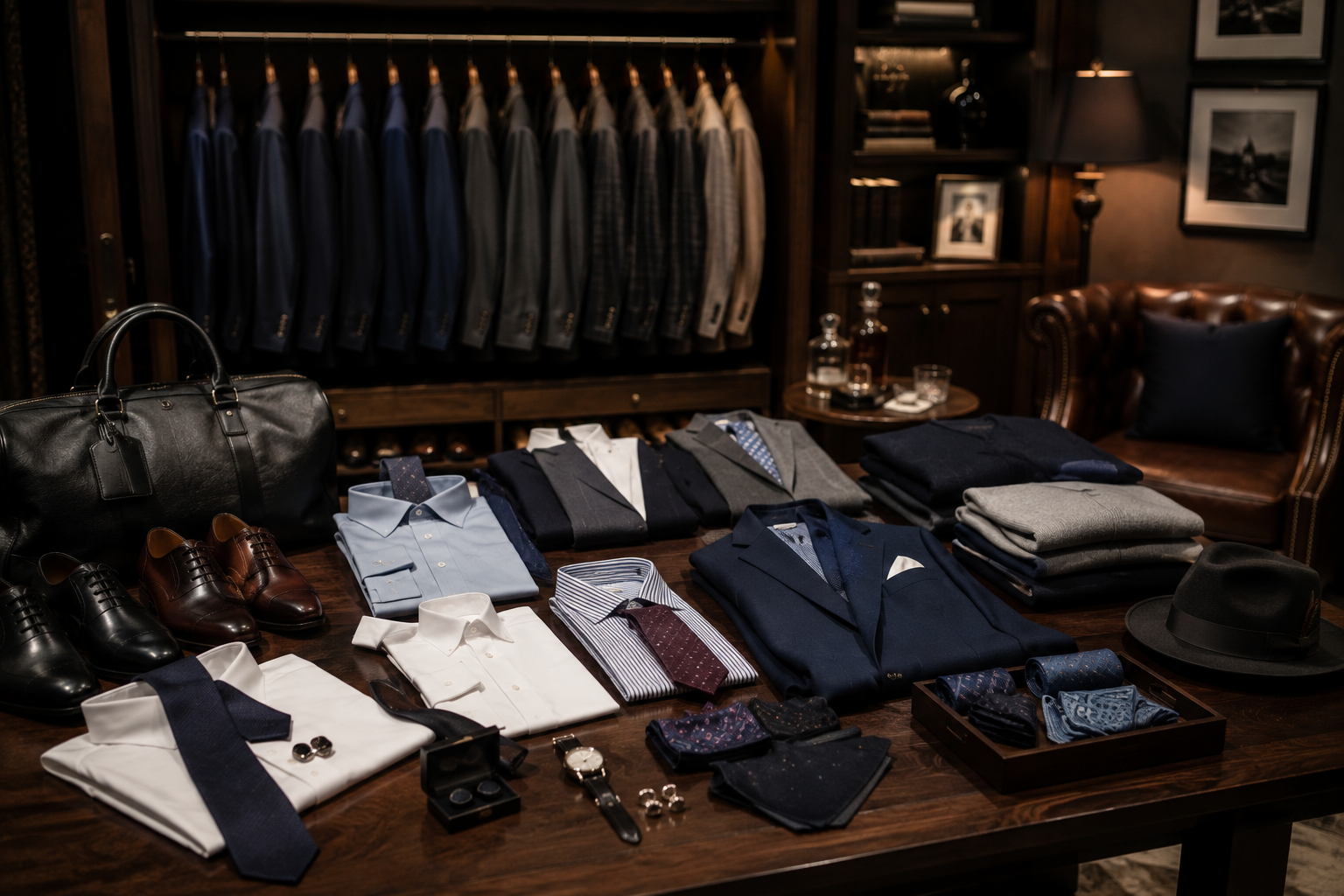
A lounge suit can been worn at less formal occasions such as business meetings and interviews but has also become far more popular at weddings. Lounge wear has a large array of style choices – from light pastel summer varieties to thicker tweed or check options. A white shirt and a tie are also worn to complement the suit.
ROYAL, DIPLOMATIC AND FORMAL OCCASIONS
Depending on the setting, the dress code changes for these occasions. At garden parties, you would wear a morning suit (see MORNING WEAR) or lounge suit (see LOUNGE WEAR), unless you have a service uniform or national dress.
At a function such as a state banquet or the state opening of parliament, dress is very formal. You must wear white tie, or national dress an decorations such a medals are often worn. These occasions are chances to wear your best and most prized possessions.
ROYAL ASCOT
Royal Ascot is the most prestigious event of the racing calendar, and although the public are able to purchase tickets for the royal enclosure, it is a very formal occasion at which no exceptions are made regarding dress. Anyone who arrives improperly dressed will be turned away. You should wear traditional morning wear (see MORNING WEAR) and although service dress is acceptable, it is rarely worn. The current dress code can be found at the Royal Ascot website.
THE RIGHT SIZE
The sleeves of any jacket should reach the wrist when the arms are straight by the side. The collar should fit closely round the back of the neck with about half an inch of shirt collar showing above the jacket. Shirt cuffs should show a little below the jacket sleeves.
The bottom of the trouser leg rests on the front of the shoe and should be slightly longer at the back.
THESE ARE GUIDELINES ONLY AND MAY BE ADJUSTED FOR PERSONAL PREFERENCE
CLICK HERE FOR DETAILED SIZING AND MEASUREMENT HINTS
IF NO DRESS CODE IS SPECIFIED ON THE INVITATION OR TICKET THEN IT IS BEST TO CHECK WITH THE ORGANISERS